Protein and Muscle Composition

Understanding protein's role in muscle maintenance and metabolic function.

Protein Structure and Function

Proteins are polymers of amino acids linked by peptide bonds. The body contains thousands of distinct proteins serving diverse functions: structural proteins providing shape to cells and tissues, enzymes catalyzing biochemical reactions, transport proteins carrying nutrients and signaling molecules, and immune proteins protecting against pathogens.

Amino Acid Composition

Twenty amino acids are incorporated into proteins. Nine of these are considered essential—they cannot be synthesized by the body and must be obtained from food. The remaining eleven amino acids can be synthesized from other substrates if necessary, though this synthesis requires metabolic energy and specific precursors.

Protein Synthesis

The body continuously breaks down and synthesizes protein. Muscle protein synthesis is particularly relevant for individuals concerned with muscle maintenance or development. This process requires not only protein (amino acids) but also energy, certain vitamins and minerals that serve as cofactors, and appropriate hormonal signals.
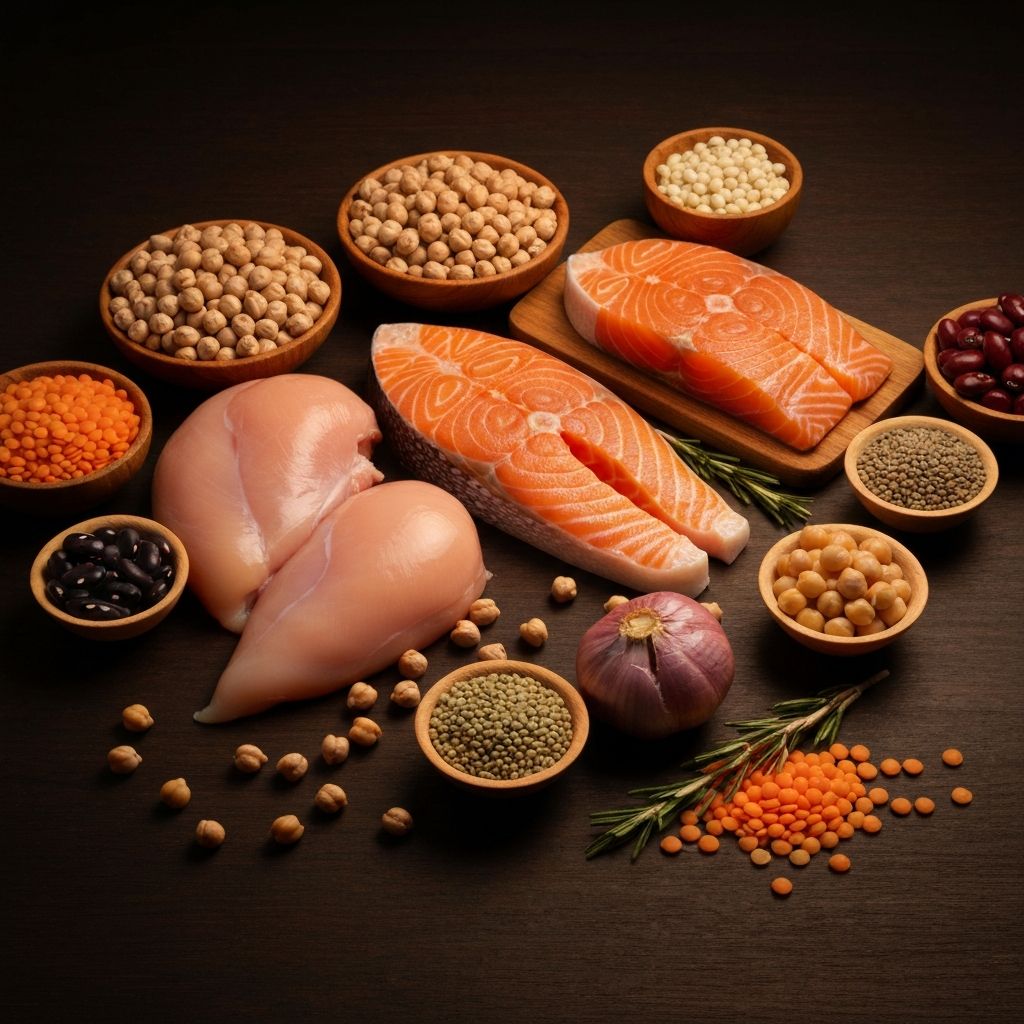
Protein-rich foods representing muscle health and strength

Muscle Physiology and Maintenance

Muscle Fiber Composition

Skeletal muscles contain two primary fiber types: Type I (slow-twitch), which is oxidative and suited for endurance activities, and Type II (fast-twitch), which is glycolytic and suited for power activities. Muscle adaptation involves changes in enzyme expression, metabolic capacity, and structural protein composition.

Age-Related Changes

Lean muscle mass typically peaks in the third decade of life and gradually declines thereafter, a process called sarcopenia. This decline occurs partly due to decreased physical activity and partly due to age-related changes in protein synthesis signaling, nutrient absorption, and hormonal factors. Resistance exercise and adequate nutrition can substantially mitigate this decline.

Protein Turnover and Balance

Muscle represents a dynamic tissue with continuous protein breakdown and synthesis. When protein intake exceeds protein breakdown, there is a positive protein balance supporting tissue maintenance or growth. When protein breakdown exceeds synthesis, there is negative protein balance leading to tissue loss.

Nutritional Factors Supporting Muscle Health

Protein Intake

Amino acids from dietary protein serve as substrates for muscle protein synthesis. The quantity and timing of protein intake influence the degree of muscle protein synthesis stimulation. Distribution of protein intake throughout the day appears to optimize total daily muscle protein synthesis.

Energy Availability

Adequate total energy intake is necessary to create an environment conducive to muscle maintenance. Chronic caloric restriction impairs muscle protein synthesis and increases protein breakdown, even when protein intake is adequate.

Micronutrient Support

Specific micronutrients support protein synthesis and muscle function. Zinc is required for protein synthesis and immune function. Magnesium is involved in muscle protein synthesis and energy production. Iron supports oxygen transport essential for aerobic metabolism. Vitamin D influences muscle protein synthesis signaling.

Resistance Exercise

Mechanical stress on muscle tissue, particularly resistance exercise, triggers signaling pathways that stimulate muscle protein synthesis. This stimulus is fundamental to muscle adaptation and is synergistic with nutritional factors.

Summary

Protein serves as the structural and functional foundation of muscle tissue. Supporting muscle health and composition requires not only adequate protein intake but also appropriate physical stimulus, overall energy availability, and micronutrient support for the physiological processes involved in muscle metabolism and adaptation.

Educational Disclaimer: This article explains the science of protein metabolism and muscle function. It is not intended as guidance for exercise programming or dietary planning. Consult appropriate professionals for personalized recommendations based on your individual circumstances and goals.

Not a medical product. Consult a doctor before use.